Search
Home | Healthy | Wealthy | Wise | Products | Newsletters | About Us| Contact

Archive for March, 2009


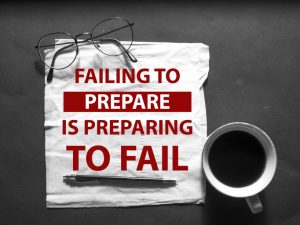
The Reason You Screwed Up

Tuesday, March 24th, 2009

Several generations of Americans have now graduated from the education system believing that a good excuse is a Get Out of Jail Free card. Flunked a test? Forgot to finish your essay on time? Late for class? No problem… IF you have a great excuse.

I knew a girl in college who killed off her grandmother three times in three semesters. Got her out of taking a final (didn’t study), out of being penalized for skipping a week of class (rock concert), out of not having a paper written on time (didn’t even try). Granny never found out. And lived a good many more years. And this girl went on to the Dean’s List, grad school, and a PhD.

The lesson learned: You can be instantly forgiven… even felt sorry for… if you just deliver a good enough excuse for screwing up.

That’s a really, really, really bad lesson to absorb. Because once you get out of school and into the real world, you have a very rude discovery to make: No one gives a rat’s ass about WHY you screwed up. The fact you DID screw up is all that matters. Your excuse will comfort no one but you, as you lick your wounds and look for another job.

The hardest thing to teach budding freelancers is the “Professional’s Code.” It’s very simple: You show up where you’re supposed to be… when you said you’d be there… having done what you said you’d do.

That’s it.

The phrase “show up” includes the physical act of appearing where you’re supposed to be… as well as the virtual act of meeting your deadlines.

I did NOT grow up with this code.

I was a victim of the school system, where few consequences couldn’t be negotiated. (Hell – the cops back then even poured out your beer and sent you home after pulling you over. I knew dozens of guys who’d been nabbed while driving with a bottle of Schlitz in one hand, and not a one of them ever suffered a DUI. Right or wrong, that’s how my corner of the generation grew up.)

As a low-level employee with no skills – my standard gig for the first decade or so of my adult life – half the job really was just showing up on time. However, once the idea of going solo as a freelancer copywriter took hold, I started looking seriously at how the really successful dudes were conducting themselves in business.

I vowed, going in, that I would meet all deadlines, no matter what. And BE that guy who could be trusted with delivering the goods to anyone who paid me.

I saw the alternative, in gruesome detail, during my time in a catalog art department.

There were multiple deadlines for photo separations, camera-ready art boards, and every word of copy. And anything that wasn’t done by the printing deadline… didn’t make it into the catalog.

The printing presses were in Nashville. They ran 365 days a year, and you booked your slot six months in advance. You missed your deadline, too bad. You paid anyway for the time and manpower. And your catalog didn’t mail.

Missing a hard deadline was a mortal wound to your ability to continue doing business. You had nothing to mail. No money came in. Clients wandered away. Banks were not nice about outstanding loans coming due.

Wow. That’ll sober you up.

In 25 years of writing copy for clients, I have never missed a hard deadline.

Let me repeat that: 25 years, zero violations on my deadline record.

This concept of never missing a deadline is the hardest thing to teach rookie freelancers. It’s almost like you gotta experience disaster first… and it’s gotta make a deep impression on you… before your mind can shift into Professional Gear.

This is why surgeons endure such rigorous training. Saying “Sorry, I was distracted” after botching an operation doesn’t cut it.

Pilots, too. Accountants. Snipers. Astronauts. Film editors. Lead singers.

You screw up… you disembowel the entire gig. And your fabulous excuse doesn’t fix anything. No one wants to hear it. Because of you, other people now have an emergency on their hands.

Entire kingdoms have crumbled from screw-ups by people who thought they had a great excuse. (”I had that 3-penny nail right here, sir. I dunno, it must have slipped from my hand back there. My arthritis has been really bad, you know, and…”)

In school, a well-crafted excuse will get you sympathy and a do-over. In real life… not so much.

And yet… I am NEVER surprised when confronted with a fresh case of someone I’ve put massive trust in… screwing up. And offering an excuse. It’s the default brain setting of almost everyone out there.

It’s really not that tough to adopt the Pro Code. It takes a commitment, and requires the skill to tell others “no” when faced with a tough choice. And to tell yourself “no” when your very natural urge to flake out and bail on your responsibilities flares up.

Everyone would rather party, or even veg out… instead of buckling down and finishing the job they signed up for. That’s the easy path. Being a true rebel nowadays means embracing responsibility with gusto and energy. The last rebellious act in business, really, is to commit to success. No matter what.

Your social life will suffer. The family will get mad at you. No one will understand, and you will toil without immediate gratification from outside sources. (Your rewards must come from your own heart and sense of self-respect.)

And it all rests on a simple foundation. If you take on a job, you do it. You kill the whiny beasts in your head, wrestle your attention deficit disorder into submission, push through pain and grief and disaster to do what you promised you’d do.

That’s how that US Airways pilot saved all 150 passengers and crew in an emergency landing in the Hudson River. That’s how all professionals worthy of the title treat every responsibility they have.

It’s hard to do. It’s kinda lonely at times. But committing to it will instantly change your life forever.

And remember: It’s no crime not to have this code already in your bag. But once you’re made aware of it, you lose big by choosing to ignore it. (So, yeah, it’s a dirty trick on my part to throw it in front of you like this.)

Today – in business and in conquering the mounting ills of the world – we need professionals more than ever. The hardest and most rewarding jobs will not get done through excuses.

[Ed. Note: John Carlton is an expert copywriter, a pioneer in online marketing, and a teacher of killer sales copy. He knows marketing inside and out. Discover how to get your hands on the kick-ass secrets of the world's smartest, happiest, and wealthiest marketers.

Think you have a good excuse for not yet having an Internet business? Wrong. With ETR's Internet Money Club Independent Learner Edition, you'll get a step-by-step playbook to making money online. All you have to do is take action.]

Comment on this article

VN:F [1.6.9_936]
Rating: 0 (from 0 votes)

Real Estate Investing Partnerships: Breaking Up Is Never Easy

Tuesday, March 24th, 2009

The main reason my husband and I were able to build a multimillion-dollar real estate portfolio in less than eight years is because we found a few trustworthy partners.

After we made two purchases, one of our partners became preoccupied with a rapidly growing business he had recently started. It got to the point where it would take weeks to get in contact with him. After a few years of struggling to make the partnership work, we agreed to split up. We figured it would be an easy split. We owned two rental units, so we each could take one. Except we both wanted to own the same unit, and we couldn’t agree on how much more that unit was worth!

So we decided to use what is known as the “I Cut, You Choose” method. In other words, to break up the partnership as though it were a chocolate bar. One partner would cut the “chocolate bar” in half, and the other partner would get to choose which half they wanted.

This is a simple yet fair way to divide up just about anything. If you’re the one doing the cutting (in this case, figuring out how much it would be worth to get – or not get – the more desirable unit), you want to come up with two options that are as even as possible… because you get the one the other party doesn’t choose.

We let our partner establish the terms of the deal. Meanwhile, we set a range for what we would be willing to pay to get the more desirable unit. When his number came in higher, we selected the option of selling him the unit for that price.

We didn’t get the unit we wanted, but we did sell it to our partner for more than we had been willing to pay for it. Our partner bought the property he wanted for the price he’d determined to be fair. We were all happy.

Our other partnerships are strong, and we don’t expect to have to split up any properties in the near term. But if we do, we have a good system to use.

[Ed. Note: For more insider strategies for getting started as a real estate investor, sign up for real estate expert Julie Broad's free monthly newsletter. Get your free report for making money with real estate here.

Real estate is a great way to make money - even in this economy. But it's just one of many strategies you can use to reel in big profits. Learn how to get your hands on over $17.3 million in money-making ideas right here.]

Comment on this article

VN:F [1.6.9_936]
Rating: 0 (from 0 votes)

The Reason You Screwed Up

Tuesday, March 24th, 2009

Issue #2624

  • WEALTHY: How a rental property is like a chocolate bar (Julie Broad)
  • HEALTHY: 3 fat-burners you can add to your meals (Jon Benson)
  • WISE: George Washington Carver on making excuses

ALSO IN THIS ISSUE:

  • The "Professional’s Code" (John Carlton)
  • Does your website reflect your reality? (Howie Jacobson)
  • It’s Fun to Know… about a surge in online coupons
  • Add "algorithm" to your vocabulary

(more…)

VN:F [1.6.9_936]
Rating: 0 (from 0 votes)

Defeating Depression

Monday, March 23rd, 2009

Issue #2623

  • WEALTHY: Even monopolies aren’t immune to this recession (Andrew Gordon)
  • HEALTHY: How many pesticides do you absorb? (Kelley Herring)
  • WISE: Robert Frost on the best way out of anything

ALSO IN THIS ISSUE:

  • Has the economy got you down? (Michael Masterson)
  • A 5-word tactic that can help you persuade… anyone (Suzanne Richardson)
  • It’s Good to Know… if you’re paying too much for your cellphone service
  • Add “catbird seat” to your vocabulary

(more…)

VN:F [1.6.9_936]
Rating: 0 (from 0 votes)

Remote-Controlled Beetles

Saturday, March 21st, 2009

University of California researchers have figured out how to control the flight of the flower beetle by remote control. The four-inch-long insect is rigged up with a radio receiver and electrodes, allowing the controller to “tell” the bug’s muscles to move it left, right, up, down, or to hover.

The research is being funded by (who else?) the U.S. military, which hopes to turn these insects into mini spy planes by strapping cameras to their backs.

The project is ongoing. They’re still working out the bugs. (Yes, we went there.)

(Source: News of the Weird and MIT Technology Review)

Comment on this article

VN:F [1.6.9_936]
Rating: 0 (from 0 votes)

The Language Perfectionist: Words’ Worth

Saturday, March 21st, 2009

Are you a writer? A speaker? Whatever you do professionally, you need to communicate effectively. That means your success is determined in part by how well you use language. A new book by Roy Blount Jr. can help you improve your knowledge and mastery of English. And as lagniappe, it’s fun to read.

Published a few months ago, Alphabet Juice revels in the joys of the written and spoken word. The title is, I gather, a play on “alphabet soup.” But it’s also a tribute to the excitement that words can generate. Explains the Introduction: “Juice as in au jus, juju, power, liquor, electricity.”

As you might expect, the text is in alphabetical order. Readers will discover short (mostly) entries on ain’t, beg the question, cliche, double negative, Goldwynisms, headlinese, kvetch, limerick, portmanteau word, semicolon, subjunctive, unbeknownst… and scores of other topics.

Blount delves into the ancient roots of words, points out unexpected connections among seemingly dissimilar words, and explains the origins of slang expressions such as phooey and pizzazz. He debunks popular “folk etymologies” that are, in fact, fabrications or urban legends.

Best known as a humorist, Blount is the author of 20 previous books. His serious interest in language is confirmed by his membership on the American Heritage Dictionary’s Usage Panel, which adjudicates thorny language disputes. But Alphabet Juice is witty and conversational, and festooned with puns, wordplay, light verse, and clever coinages (e.g., antepenultimatum: two warnings from the final one!).

Here are some excerpts that illustrate the book’s range of subjects and the author’s distinctive style:

babble/babel: “It’s hard to believe that these two words, whose meanings are so close, have no etymological connection. But they don’t, say the scholars: Babble is from baby talk and babel from the Bible.”

English: “English is an outrageous tangle of those [Greco-Latin] derivations and other multifarious linguistic influences, from Yiddish to Shoshone, which has grown up around a gnarly core of chewy, clangorous yawps derived from ancestors who painted themselves blue to frighten their enemies.”

intelligible: “We say something is unintelligible or barely intelligible, but we never say, ‘That argument of yours sure is intelligible.’”

mic: “I hate to see mike, short for microphone, rendered as mic, which is how it tends to be spelled these days… . Mic, dammit, should be pronounced mick… . The colloquial abbreviation of a word is not limited to letters taken from that word. If it were, we wouldn’t be able to shorten refrigerator to fridge.”

wrought: “… not the past tense of wreak, as is often assumed, but of work, in the sense of making something, forming something, bringing something about… . Archaic though the word wrought is, it has stayed alive… .”

One of Blount’s favorite themes is that certain words are imitative, reflective of their meanings, or that they “sensuously evoke the essence of the word”: blob, crackle, grunt, queasy, scrawl, throb, wince, zest, and many others. He calls such words “sonicky.”

I applaud the author’s prescriptivism. He firmly defends the traditional definitions of many words and doesn’t capitulate to their popular misuses – e.g., disinterested, hopefully, and literally. He also advocates, as I do, retaining the hyphen in e-mail.

Any quibbles? A few. Because the book is formatted like a dictionary or encyclopedia, some readers may be misled into assuming that it’s a comprehensive reference work. It’s not. The author chose to include items that struck his fancy, and excluded others. Thus, you’ll find helpful discussions on flack vs. flak and the misuse of incredible, but you’re out of luck if you’re seeking clarifications for other troublesome words, such as comprise, enormity, or fortuitous.

My hunch is that Blount, over several years or decades, habitually tossed notes and clippings into a shoebox. Then, when the collection became large enough, he cobbled everything into a book. There’s nothing wrong with that. After all, it’s pretty much the technique I use to write these columns for ETR! But for a complete guide to the English language or English usage, you’ll have to consult a volume other than Alphabet Juice.

It’s perhaps not surprising, then, that the book is something of a grab bag. The content sometimes tends toward the random, desultory, and idiosyncratic. Blount isn’t reluctant to free-associate or to digress into sports, movies, or an irrelevant anecdote from his childhood or adolescence. The entry on consonants somehow sparks a recollection of his father’s tool chest, and a discussion of spelling bees leads to… Madame de Pompadour? He’s also prone to shameless name-dropping. These excursions are interesting, but their connection to language is often minimal or nonexistent.

A final gripe: Alphabet Juice lacks an index and a table of contents. Apparently, when a book is formatted alphabetically, the publisher considers both to be dispensable. But without an index, the reader can’t easily find proper names or terms that aren’t major entries. A listing of topics up front isn’t redundant. It’s a valuable tool that gives the reader an overview of the book at a glance.

These reservations aside, Alphabet Juice is informative, entertaining, and amusing. And a big advantage in these times of information overload is that you need not read it cover to cover. Browsing and grazing in its pages will reward you well.

[Ed Note: For more than three decades, Don Hauptman was an award-winning independent direct-response copywriter and creative consultant. He is author of The Versatile Freelancer, an e-book recently published by AWAI that shows writers and other creative professionals how to diversify their careers into speaking, consulting, training, and critiquing.

Knowing just the right word to say can not only help you become a more persuasive writer and speaker – it can elevate others’ impressions of you. Spend 10 minutes a day with ETR’s Words to the Wise CD Library and learn how to command a powerful vocabulary quickly, confidently, and easily.

Comment on this article

VN:F [1.6.9_936]
Rating: 0 (from 0 votes)

The Other Infrastructure Stimulus Program: Iraq and Afghanistan

Saturday, March 21st, 2009

Two things will define 2009 for the U.S. One is the huge $787 billion economic stimulus package featuring “smart grids,” roads, and bridges. The other is the winding down of the war in Iraq.

Obama will begin withdrawing troops as soon as he can. That may not be until 2010, but much of the planning will be laid out this year.

But downsizing troops doesn’t mean downsizing our involvement. The goal is to save lives. And the quid pro quo will be spending more money.

So talk about reducing contractor levels in Iraq is just that – talk. The next stage will be a big increase in outsourcing reconstruction and security functions to the private sector.

Iraq will be getting loads of new stuff, including tow trucks, communications vehicles, hauling vehicles, aerial platforms for construction, fire and garbage trucks, and heavy-load hauling vehicles.

And Uncle Sam, of course, will be paying the bill.

The companies that can take advantage of both of Obama’s huge infrastructure programs – the one that will play out in the U.S. and the one that will play out in Iraq and Afghanistan – will be big winners in 2009 and 2010.

[Ed. Note: Investment expert Andrew Gordon is just one of 14 masters of making money who will be giving you the inside scoop on some very hush-hush secrets for turning a nifty buck in the next few years. Find out how to get your hands on these experts' SAFEST and most PROFITABLE income-generating and entrepreneurial opportunities right here.]

Comment on this article

VN:F [1.6.9_936]
Rating: 0 (from 0 votes)

Words’ Worth

Saturday, March 21st, 2009

Issue #2622

  • WEALTHY: Why a military drawdown equals profits (Andrew Gordon)
  • HEALTHY: What’s a burpee? (Craig Ballantyne)
  • WISE: Gyles Brandreth on the pleasure of words

ALSO IN THIS ISSUE:

  • An entertaining new book that will improve your command of language (Don Hauptman)
  • How to sell a physical product online (Marc Charles)
  • It’s Fun to Know… about remote-controlled beetles
  • Add “lagniappe” to your vocabulary

(more…)

VN:F [1.6.9_936]
Rating: 0 (from 0 votes)

A No-Equipment-Necessary Strength Builder

Saturday, March 21st, 2009

A “burpee” is a tough, advanced bodyweight exercise – strength and endurance packed into one – that you can do without any equipment. There are all sorts of variations, but my favorite is to add a push-up in the middle and a jump at the end. Here’s how to do it:

• Stand with your feet shoulder-width apart.

• Squat down, place your hands on the floor, and thrust your feet back into push-up position.

• Do a push-up, and bring your knees back up to your chest.

• Jump up as high as you can, landing with your knees slightly bent.

• Repeat for 6-10 repetitions.

Make sure you wear proper shoes and do this on a soft surface (not concrete or pavement).

[Ed. Note: You don't need fancy equipment, hours of cardio training, or even a gym membership to build muscle and burn fat. Learn how you can get fit with three 45-minute workouts a week with fitness expert Craig Ballantyne's Turbulence Training program right here.

For more easy-to-follow advice on how to stay fit, lose weight, and eat right, sign up for ETR's FREE natural health newsletter.]

Comment on this article

VN:F [1.6.9_936]
Rating: +1 (from 1 vote)

Who can effectively put my product on the market?

Saturday, March 21st, 2009

“I just read Marc Charles’s article about getting 100,000 people hawking your products. I have a special situation, and would like your guidance.

“I have almost finished producing the first of four hour-long instructional DVDs. I have found that there’s an average of 3,000 hits daily from folks wanting this informational product, but there is nothing out there to fill the demand.

“This product is perfect to sell online. Organizations such as ClickBank, however, handle only digital, downloadable products, not physical products like mine. (I’ve looked into it and, because the video is so long, have not yet found a way to allow buyers to download it immediately upon purchase.)

“Who do you know that can effectively put my product on the market? My time will be taken up with production, shipping, and other such details that will limit my opportunities to handle marketing.”

Edith Benjamin

Dear Edith,

When you say there are “3,000 hits daily” from folks wanting this informational product, that doesn’t tell me what I need to know. “Wanting” and “buying” are two different things. A lot of people want information but are not willing to pay for it. And where are these “hits” occurring? In Google? Another search engine? Across the entire Internet?

You say that “there is nothing out there to fill the demand.” This is a big red flag! As marketing master Michael Masterson has said time and again, “Base your plan on the success of someone else. Don’t reinvent the wheel.”

Whenever someone comes to me with a product idea they want me to develop, I require three specific examples of a similar product already selling in the marketplace. I’m not interested in trying to develop or sell a product when there is no competition. If there’s nothing out there to fill a “perceived” demand, it usually means there is no demand for that product in its current form and at its current price point.

The first thing you have to do is prove that your product will sell. You’re looking for someone else to do the marketing because you say your time will be taken up with production, shipping, and other details. This is a huge mistake. Right now, 90 percent of your time, money, energy, and passion should be focused on marketing and making the first sale. Production, shipping, and other details are irrelevant unless you can do that.

You’re right. ClickBank does not handle physical products. But hundreds of sites do. Nightingale-Conant, for instance, is one of the top marketers of instructional DVDs. However, they tend to focus on products produced in house. The lion’s share of instructional DVDs are being sold on eBay, Amazon.com, Yahoo! Marketplace, and BN.com.

You can set up your own affiliate network to sell your DVDs with Linkshare.com, Commission Junction (cj.com) and PayDotCom.com, and Pepperjam.com. And don’t forget about selling on Google directly with organic search and pay-per-click keyword ads.

Search Google today to discover who’s selling instructional DVDs successfully and how they’re doing it.

I hope that helps!

- Marc Charles

[Ed. Note: Marc Charles is an expert at finding low-cost business opportunities. He'll reveal a new money-making method each week in Profit Center Dispatch. Sign up now.

Have a question for an ETR expert? Send it to AskETR@ETRFeedback.com.]

Comment on this article

VN:F [1.6.9_936]
Rating: 0 (from 0 votes)

When a #1 Google Rank Is Bad for Business

Friday, March 20th, 2009

Issue #2621

  • WEALTHY: An overlooked precious metal making a comeback (Rick Pendergraft)
  • HEALTHY: Are those “corn” nuts you’re eating? (Kelley Herring)
  • WISE: Seneca on quality vs. quantity

ALSO IN THIS ISSUE:

  • How a top spot on Google can limit your sales (Edwin Huertas)
  • There is no try… only do (Yanik Silver)
  • It’s Good to Know… why you should be keeping a career journal
  • Add “flummery” to your vocabulary

(more…)

VN:F [1.6.9_936]
Rating: 0 (from 0 votes)

You Are Not a Loser!

Thursday, March 19th, 2009

I recently let my guard down and let my wife talk me into making one of my rare visits to a nearby shopping mall – one of my least favorite places.

The place was mobbed, as though people were determined to have one last go at the good life, perhaps sensing that shopping malls might soon be turned into homeless shelters. I watched with great interest as people stood in long lines to pay for the on-sale merchandise they clutched tightly in their arms.

Strolling through Foot Locker, I examined a number of tags to see where the goods had been manufactured. No Honduras or Sri Lanka here. No sir. Virtually everything I looked at was made in none other than Cambodia.

My mind became an instant time machine. It hasn’t been that long ago that Richard Nixon was explaining that the reason he secretly bombed Cambodia was to “end the Vietnam War sooner.” Hmm. As I recall, that didn’t work out too well.

It also hasn’t been that long ago that Pol Pot’s Khmer Rouge slaughtered 2 million of their own countrymen, leaving their skulls neatly stored on rows of shelves in warehouses. Cambodians have always been fastidious about such matters, you know. Just one of those unfortunate things that seem to happen when communist revolutions are carried out in the name of “the people.”

But all is well, because the Khmer Rouge are long gone and Foot Locker has found a great new labor force to satisfy Americans with big appetites for material things and too little cash to pay for them. Now, however, even cheap Cambodian products have to be put on sale in order to entice cash-strapped shoppers to buy.

What I thought about mostly, though, as the mob threatened to swallow me alive, was the contrast between the salivating materialism at the mall and a show that Dateline did on foreclosures a while back. The show was grim, to say the least.

The Dateline documentary featured a lot of people who were lamenting that they hadn’t read the fine print in their loan agreements when they bought their houses. Many, of course, couldn’t afford their houses even at the original interest rates they paid. But many more found themselves in trouble when the adjustable-rate time bombs built into their mortgages exploded.

Dateline didn’t leave anything to the imagination – sheriffs serving eviction notices on visibly shaken people, movers putting furniture and personal belongings out on front lawns (where their owners had 24 hours to take them away), tears streaming down people’s cheeks as they bemoaned the sobering reality that they had no place to go.

One young man, with his daughter’s arm around his shoulders, sat on his front step and, with tears in his eyes, kept repeating, “I’m a loser.” You’d have to be pretty hardhearted for that not to grip you. Having been homeless myself at one time in my life, I could relate. I know what it feels like to have nowhere to sleep.

So I have a message for that young man: Even though I don’t know you, the odds are that you are not a loser. You’re just a person who’s made some bad decisions. And now, like me and everyone else who has made bad decisions, you’re experiencing the consequences of your actions.

But that shouldn’t stop you from learning from this experience and profiting from it in the future. In the words of Robert Kiyosaki, author of Rich Dad, Poor Dad (who was once so broke that he and his wife had to sleep in their car), “Winners are not afraid of losing. But losers are. Failure is part of the process of success. People who avoid failure also avoid success.”

The day I started paying closer attention to the news was the day I started realizing that I wasn’t uniquely stupid in making many bad decisions.

• How smart were the wealthy people who invested in Bernard Madoff’s Ponzi scheme?

• How smart were the top brass at the Big Three automakers?

• How smart were Barney Frank & Friends for pushing Fannie Mae and Freddie Mac into making sub-prime loans to people who couldn’t afford any kind of loan?

• How smart were the corporate boards of Citigroup, Wachovia, Goldman Sachs, Bear Stearns, Lehman Brothers, et al. that were not able to continue without handouts from taxpayers?

If you’ve lost your home, your business, and/or your money, don’t be intimidated. The guys running many of the biggest corporations in the world have managed to lose billions, which makes them many times dumber than you.

Sure, the deck is stacked against you, because you don’t have billions to work with and you don’t qualify for a taxpayer bailout. But the way I look at it, the deck is stacked against everyone – because no matter what we do, we aren’t getting out of here alive anyway. In the words of British economist John Maynard Keynes: “In the long run, we’re all dead.”

With the economy in shambles, now is the perfect time to get all this squared away in your mind. Get up off the floor and listen: You’re not dumb, and you’re not a loser. You just haven’t learned to be as clever as the guys who make super-dumb decisions and still walk away with millions.

Regardless of where you are today, I can tell you where you will be next year at this time: exactly where you should be according to how resilient you are over the next 12 months, how determined you are, how hard you work, and how good your decisions are.

Just be sure to keep in mind Robert Kiyosaki’s warning that people who avoid failure also avoid success. Above all, remember that there’s a lot more to success than bean counting. If you have love and good health, you’re already successful.

A loser is someone who quits. If you never quit, you never lose.

[Ed. Note: You may have made mistakes. You may have failed. But that doesn't mean you can't live the life you always hoped for. Learn how ETR can help make your dreams come true right here.

For a treasure chest of proven ideas, strategies, and techniques for increasing your income many times over, check out Robert Ringer's bestselling dealmaking audio series.

And be sure to sign up for his Voice of Sanity e-letter.]

Comment on this article

VN:F [1.6.9_936]
Rating: 0 (from 0 votes)

How to Profit From the Coming Boom in Inflation

Thursday, March 19th, 2009

Well folks, it looks like the inflation genie is out of the bottle. All these economic stimulus packages and bailouts will have to be paid back eventually.

Where is all the money going to come from?

Investors around the world are still standing in line to buy our short-term government securities. But China’s exports have plummeted, so they no longer have money to lend us. And oil prices have dropped sharply, so OPEC doesn’t have as much to lend us.

What happens if the world stops supporting our lavish spending habits? We will have to print more paper money to meet our crushing debt obligations. Not only could that scare investors out of the dollar and into the euro or Japanese yen… it will result in a huge jump in inflation.

So how you can profit from inflation? You can own an asset whose purchasing power has outlasted governments and civilizations for more than 5,000 years: Gold.

Gold is the best performing asset class this decade. Since 2000, gold is up more than 200 percent, and it looks like it will keep going.

Inflation decreases the value of the U.S. dollar. As the dollar goes down, the value of gold tends to go up, because gold is priced in dollars. That’s why you should be a gold bug.

[Ed. Note: Ted Peroulakis has over 14 years of experience in the financial industry and is a top options trader and financial analyst.

Gold isn't the only investment you can profit from in 2009. By learning about Internet business, real estate trends, and "safe" stock investing from the best in their fields, you can invest in yourself and your future. Find out how to get your hands on the SAFEST and most PROFITABLE income-generating and entrepreneurial opportunities you've never heard of right here.]

Comment on this article

VN:F [1.6.9_936]
Rating: 0 (from 0 votes)

You Are Not a Loser!

Thursday, March 19th, 2009

Issue #2620

  • WEALTHY: Another reason to invest in gold (Ted Peroulakis)
  • HEALTHY: Toxic metal in a common sweetener (Matt Furey)
  • WISE: Zig Ziglar on failure

ALSO IN THIS ISSUE:

  • If you feel like giving up… (Robert Ringer)
  • How to make fear work in your marketing copy (John Forde)
  • It’s Fun to Know… about the big boys’ playground
  • Add “wizened” to your vocabulary

(more…)

VN:F [1.6.9_936]
Rating: 0 (from 0 votes)

Mercury for Breakfast

Thursday, March 19th, 2009

Want guaranteed improved health?

Okay, you got it.

Here’s Tip #1 of my plan for how this can be accomplished: Eliminate high fructose corn syrup (HFCS) from your diet completely.

Not only has this sweetener caused a rapid increase in the number of people with diabetes in this country – but now we have reports that much of the HFCS out there contains measurable amounts of a toxic metal.

What is this toxic metal? Mercury. That’s right. Mercury.

One drop of mercury is supposed to be enough to contaminate an entire lake. And exposure to mercury has been connected with serious neurological disorders, including autism and Alzheimer’s. But I guess it’s okay for the fillings in your teeth – as well as our food supply. NOT!

It’s hard to imagine that HFCS could be made any worse for the human body than it already is, but the FDA – the people in charge of our food supply – have allowed it to happen.

Read the labels on everything you eat and drink. You’ll be amazed.

At my daughter’s school, they give the kids breakfast bars for a treat. The number one ingredient is “filling.” Guess what’s number two? HFCS.

Grab a bottle of your favorite sports recovery drink. Look at the ingredients. Whatever happened to these drinks being a source of electrolytes?

Now you may call me an alarmist for telling you this. Then again, maybe what I’m telling you will lead to one of the most positive changes you will ever make in your life.

[Ed. Note: Matt Furey - a national collegiate wresting champion (1985) and a world shuai-chiao kung fu champion (1997) - is the author of the international bestsellers Combat Conditioning, Combat Abs, and Gama Fitness. Discover how you can increase your strength, endurance, and flexibility without lifting weights or long-distance running right here.

For unbiased information on critical men's and women's health issues... the latest breakthroughs in alternative medicine, fitness, and nutrition... as well as motivational guidance to help you achieve your goals, sign up for ETR's natural health newsletter.]

Comment on this article

VN:F [1.6.9_936]
Rating: +1 (from 1 vote)

What Keeps Your Customer Up at Night?

Thursday, March 19th, 2009

Fear – the deeply felt kind – is personal and immediate. The fear of disabling disease. The fear of public speaking. The fear of not surviving this current market crunch… or making a terrible investment.

And it’s no accident that these same personal, immediate fears are the ones that tend to have the most hooking power in the headlines of sales letters and ads. Not only because they’re specific. But because, by tapping into those fears, marketers are able to make an emotional connection with their customers.

These immediate fears are attached to problems they feel they can solve… or hope they can. And that is key to producing marketing copy that works. 

But fear alone doesn’t make the sale. Showing you know the cause of your customers’ anxiety gets their attention. But what really makes a fear headline work is the hint of a solution. Think about some of the classics:

“Do You Make These Mistakes In English?”… “Do You Do Any of These Ten Embarrassing Things?”… “Why Some Foods ‘Explode’ In Your Stomach”… “Have You A ‘Worry’ Stock?”…

What makes these headlines work is what you don’t see here, but what’s surely delivered in the copy that follows: the promise of better language skills… better social skills… better health from better eating… safer investing…

By the end, the copy transforms the customer from pessimist to optimist, full of hope and ready to try whatever it is you have to offer. 

[Ed. Note: To get more of copywriting expert John Forde's wisdom and insights into marketing (and much more), sign up for his free e-letter, Copywriter's Roundtable, at copywritersroundtable.com. Or send an e-mail to signup@jackforde.com. Get a free report about 15 deadly copy mistakes and how to avoid them when you sign up today.] 

Comment on this article

VN:F [1.6.9_936]
Rating: 0 (from 0 votes)

How to Get Your Business in the News

Wednesday, March 18th, 2009

Coverage by the media can give a great boost to your business. But reporters and editors are a picky lot. Here are six ways to convince them your “story” is worthy of a mention.

• Make sure all your contact information is included in e-mails, press releases, and other communications with the media. If a reporter has to spend more than a minute figuring out how to reach you… she’ll move on to the next candidate.  

• Have your elevator pitch down pat. You should be able to tell an editor, in a minute or less, why your business should be in their publication.

• Figure out how to tie “hot” news of the day into something you are doing with your business. Pitch your story with that angle.

• Check thoroughly for typos, grammar, and factual errors on all communications. Nothing irks editors more than sloppy writing.

• Make sure you contact the right media niche. If your business is in pet supplies, don’t send press releases to an automotive trade journal.

• Make it easy for a reporter to write a story about you by including plenty of quotes, facts, and examples in your press release. And put the most important information near the top.

(Source: Inc.)

Comment on this article

VN:F [1.6.9_936]
Rating: 0 (from 0 votes)

Stressed? Try Vagus

Wednesday, March 18th, 2009

The effect of stress takes a nasty toll on your life. But it doesn’t just damage your psyche. It harms your body too.

Stress increases dangerous inflammatory factors called cytokines… damages the hippocampus, causing memory loss and mood disorders… reduces the brain’s ability to repair itself… increases abdominal fat… interferes with thyroid function… and even increases the stickiness of the blood (which can lead to dangerous clots).

But there’s something very simple you can do to help alleviate the effects of stress. Stimulate your vagus nerve.

The vagus nerve controls the relaxation response through the neurotransmitter acetylcholine. And this anti-stress machine can be turned on in a matter of minutes.

Here is the exercise.

Take a deep breath into your belly to the count of five. Pause. Breathe out slowly to the count of five. Keep your belly soft. Repeat 5 times.

With this simple and effective exercise, you instantly reduce your levels of cortisol and help your body get back to a peaceful state of balance.

In addition to a few minutes a day of soft-belly breathing, you can bolster your body’s defenses against stress by engaging in regular vigorous exercise, eating a clean diet of healing foods, and enjoying fresh air and sunlight.

[Ed. Note: These days, you've got more stressors than ever before. If stress doesn't kill you outright, it most likely WILL plunge you toward all the diseases of aging, much faster than you deserve! Learn how to make your body more resilient to stress, so you can have the health and energy you need to build a brighter future.

Eating right goes a long way toward making you feel better. Pick up a copy of nutrition expert Kelley Herring's collection of recipes for dozens of delicious and guilt-free desserts. Pick up your copy today.]

Comment on this article

VN:F [1.6.9_936]
Rating: 0 (from 0 votes)

Past Due Bills of the Deceased

Wednesday, March 18th, 2009

The death of a loved one is tough enough. But hearing from debt collectors just weeks after the funeral makes it much worse.

Before you make any promises to “settle” your relative’s accounts, whether a cellphone bill or credit card debt, know this: You probably don’t have to pay a dime out of your own pocket. The debt can be paid with the deceased’s estate and whatever you have inherited from it. But, although laws vary from state to state, heirs are not usually required to pay off the deceased’s bills with their own money.

That doesn’t stop collection agencies from asking you to do just that by using carefully worded language. Some even position themselves as helping you with payment plans.But if you ask them directly, they should admit that you do not have to pay.(Source: The New York Times)[Ed. Note: How to deal with unsavory creditors is just one of the dozens of tricks and techniques to improve your life at work, at home, and everywhere in between that you'll learn with ETR's Unscrew Your Life newsletter. Sign up today and get a valuable free guide to getting past hundreds of life's little irritations.]

Comment on this article

VN:F [1.6.9_936]
Rating: 0 (from 0 votes)

The Importance of Being Urgent

Wednesday, March 18th, 2009

There’s one thing that all successful Internet marketers and business owners I’ve come in contact with have in common.

A sense of urgency.

Successful entrepreneurs look at practically every moment of every day as a challenge -and they attack it accordingly. This need for achievement motivates them to turn their ideas into action.

On the other end of the spectrum are “passive” entrepreneurs. They live every day pursuing their dreams safely, never taking risks or pushing the envelope, and hoping something good will happen.

I’m not just talking out of my keister here. I’m a living, breathing example of a former passive personality.

It wasn’t until a mentor shook me from the doldrums and forced me to take that first step into the unknown that I started to see some serious results.

Why? Because successful people act from a sense of urgency.

So today, I want you to do exactly what I did. Ditch the passive nature and begin looking at your dreams with a SENSE OF URGENCY.

Tell yourself, “Today, I’m going to make a change and act from a sense of urgency. And these are the first two actions I’m going to take…

[Ed. Note: Rich Schefren - one of the world's best small-business strategists - knows a thing or two about what it takes to be successful. The businesses he coaches have done over $500 million every year - piling up more than $1 billion in sales every two years. Visit his blog to learn how to streamline your business while skyrocketing profits.

The ability to sell is another trait shared by successful entrepreneurs. If you don't know how to sell, you're LOSING money. It's time to amp up your selling skills. You can learn how to do it from Gene Schwartz, one of the world's best copywriters. Get the details here.]

Comment on this article

VN:F [1.6.9_936]
Rating: 0 (from 0 votes)

Foreclosure Investing: How to Wholesale

Wednesday, March 18th, 2009

As a real estate investor, you can stand to make serious amounts of money. But these days, with 5.4 million Americans behind on their mortgage payments and pending home sales dropping, you might think real estate is a bad bet.

Not true.

I’ve made over 350 real estate deals in the past 14 years – many of them in this terrible market. And in my experience, one of the best ways to cash in on real estate is by wholesaling foreclosures.

I remember one house that had a value of $1.9 million but had been standing vacant for four years. I ended up buying it for $1.2 million and wholesaling it for $1.5 million. In just a few days, the seller was relieved of a crushing financial burden, the buyer was patting himself on the back for getting a great bargain, and I was on my way to the bank with a check for $219,797.58.

In real estate, wholesaling means entering into a contractual agreement with another party for the purpose of purchasing a property, and then assigning your interest in that contract to another investor in exchange for compensation.

The business of wholesaling is not just a trend in the real estate market. It is progressively gaining momentum and popularity with both new and experienced investors. No license is needed, so just about anyone can do it. Plus, turnaround time is quick. The basic idea is to get in, get out, and get paid.

Foreclosed property is especially attractive to wholesalers because it’s owned by a bank, not an individual. The bank wants to get rid of it as soon as possible – and that gives the investor an advantage.

The foreclosure process varies depending on whether the state is judicial or non-judicial. In judicial states, foreclosure requires legal action; non-judicial states do not deem it necessary.

In non-judicial states, the borrower can grant the power of sale directly to the lender. After the borrower fails to make several payments on his loan, the lender files a Notice of Default (NOD) and the foreclosure process is put into effect. After about three months, the lender files a Notice of Sale (NOS). The property is now in control of the bank – listed on its books as Real Estate Owned (REO) – for 21 days until the actual foreclosure sale.

Depending on where the property is in the foreclosure process, you can buy it by approaching the homeowner directly, purchasing it at a public auction, or buying it from the bank.

Approaching the homeowner directly gives you the ability to negotiate terms and offers the potential for huge profit margins. But you have to deal with title, liability, and legal issues.

Public auctions, too, give you the potential for huge profit margins. But, again, there are some significant negatives. For one thing, you have to make the purchase with cash (unless you are purchasing from a real estate disposition company, such as the auctions you see put on by USHomeAuction.com and HudsonandMarshall.com). For another, the property is sold “as is.” If you want to have it inspected by a professional, you have to incur that expense before you even bid on it.

The profit margin can be substantially higher when you buy from a bank. You can (usually) get the property inspected after you’ve made the deal and void the contract if the inspection uncovers anything seriously wrong. Plus, there is no need to worry about title assignment or other legal issues.

When you are making an offer on a bank-owned property, you can write up the offer in the name of a land trust, and then simply assign your beneficial interests in that trust to your wholesale buyer. Or you can write the offer in your own name and, at the bottom of the contract, include this clause:

“Vesting to be determined at close of escrow.”

This allows you to take title in any entity, including your wholesale buyer’s name. The reason you want to do that is because banks will not let you assign your contract to a specific person. If you put “and/or assigns” on your contract, your offer will not be accepted.

The deal is now complete, and you can go on to the next one that is just waiting to be found.

[Ed Note: Jeff Adams is a self-made multi-millionaire who has bought and sold more than 350 properties in the last 14 years. Over the last 10 years, he's found and sold his deals using the Internet. You can get more of his advice and his free course for a limited time by visiting www.ForeclosureProfitSystem.com.

If you can't (or don't want to) take on real estate investing full-time, Jeff's system of attracting buyers, sellers, and investors with automated websites can still help you make big profits by leveraging the power of the Internet. Get all the details at ETR's upcoming Profits in Paradise wealth-building summit. But hurry! Our Early Bird Discount ends today at 5:00 p.m. Eastern.]

Comment on this article

VN:F [1.6.9_936]
Rating: 0 (from 0 votes)

Making the Foreclosure Crisis Pay Off

Wednesday, March 18th, 2009

Issue #2619

  • WEALTHY: A crash course in a popular real estate investment strategy (Jeff Adams)
  • HEALTHY: Reduce your stress in 50 seconds (Kelley Herring)
  • WISE: Emily Dickinson on taking advantage of every opportunity

ALSO IN THIS ISSUE:

  • The one trait shared by all successful entrepreneurs (Rich Schefren)
  • Read this before you whip out that checkbook (Jason Holland)
  • It’s Good to Know… how to get your business in the news
  • Add “yegg” to your vocabulary

(more…)

VN:F [1.6.9_936]
Rating: 0 (from 0 votes)

The World’s Worst Commute

Tuesday, March 17th, 2009

Think your commute is tough? Well, consider what the residents of Los Pinos, Colombia do every day to get to work and school.

Because their remote village is in the mountains, “commuters” have to use a zip line cable to get across a 1,200-foot-deep gorge. And each one has to bring his or her own pulley, rope, and a piece of wood to act as a brake when they get to the other side.

The alternative is a two-hour hike around the gorge.

 (Source: Ripley’s Believe It or Not)

Comment on this article

VN:F [1.6.9_936]
Rating: 0 (from 0 votes)

Another Reason to Exercise in the Morning

Tuesday, March 17th, 2009

Back when I trained clients full-time, I always wondered what possessed them to get up at 5:00 a.m. and work out. Couldn’t they at least wait till 7:00 or 8:00?

But now that I’ve grown older, and busier, it’s easy to see why. First, it gets the workout done before other people and problems can get in the way. Plus, recent research shows that you will have a better workout when you are “mentally fresh.”

In a study published in the Journal of Applied Physiology, researchers put subjects through a cardio workout to exhaustion after performing one of two mental tasks. The first task was cognitively demanding. The second task simply required them to watch a documentary.

Results showed that the mentally fatiguing task significantly reduced the amount of exercise the subjects could do. They tired out much more quickly if their minds were already fatigued.

[Ed. Note: No matter when you exercise, you don't need hours of cardio to get into tip-top shape. Learn how you can get fit with three 45-minute workouts a week with Craig's Turbulence Training program right here. For more easy-to-follow advice on how to stay fit, lose weight, and eat right, sign up for ETR's FREE natural health newsletter. ]

Comment on this article

VN:F [1.6.9_936]
Rating: +1 (from 1 vote)

How to Make Your Ideas More Valuable

Tuesday, March 17th, 2009

“Adam” seems like a nice guy. He subscribes to Early to Rise, and, in a recent e-mail, said he is especially interested in my articles about how to get into the movie business. He said that he doesn’t have time to try to get into the movie business himself, but he has tons of ideas. So he would like to offer his ideas to me – and, if I wanted to do something with them, he would get a percentage of whatever money they brought in.

You might think this sounds like an attractive deal for me – but it’s not. Here’s how I explained it to Adam: I get about 20 of these offers a week. Not only that, but I have no shortage of my own ideas that I want to develop. And those ideas are my babies. I only wish I had enough time to work on them all. So do I need his ideas? Nope.

Compare Adam’s e-mail to the one I got from “Cara.” She wrote to tell me that she has the signed life rights of one of baseball’s biggest stars. She also has a finished script based on his story – one she claims was written at a professional level. She wanted to know if I would be interested in helping her market it in exchange for a cut of the profits.

Unlike Adam’s offer, Cara’s seems worth looking at. I asked her to send me a copy of the script and the signed agreement on the life rights. If the script is good, I know I can make a few quick calls and get it seen by someone who might want to produce it.

What’s the difference between Adam and Cara? Cara has a complete package that sounds highly marketable. So by putting in a little effort on it, there’s a chance I could see a big payday. Adam might have some great ideas, but so what? As the saying goes, an idea and 62 cents will get you a phone call.

If you’re serious about making money with your great idea, don’t just offer it up to someone in the hopes that they will be able to turn it into something profitable. You’ve got to do the hard work yourself. Bring them a package that they can help you produce or market – a package that has the very real potential to make both of you a lot of money.

[Ed. Note: Paul Lawrence is a successful small-business entrepreneur who has sold and licensed the rights to both intellectual and physical products. The results? He receives quarterly checks for many thousands of dollars in royalty payments from other companies. For more information on his program - which teaches you how to obtain and license rights - click here.]

Comment on this article

VN:F [1.6.9_936]
Rating: 0 (from 0 votes)

The Law of Forced Efficiency

Tuesday, March 17th, 2009

The law of forced efficiency says: “There is never enough time to do everything, but there is always enough time to do the most important thing.”

The fact is that the average person today is working at 110-130 percent of capacity. And the jobs and responsibilities just keep piling up. One recent study concluded that the average executive has a backlog of 300-400 hours of reading and projects at home and at the office.

What this means is that you will never be caught up. Get that out of your mind. All you can hope for is to keep on top of your most important responsibilities. The others will just have to wait.

The key question you can ask is: “What is the most valuable use of my time, right now?”

Every hour of every day, there is an answer to this question. Your job is to ask yourself that question, over and over again – and to make sure you’re always spending your time working on whatever is most important at that particular moment.

The more accurate your answers to this question, the easier it will be for you to set clear priorities and overcome procrastination.

[Ed. Note: In his book, Eat That Frog!, personal effectiveness expert Brian Tracy shows you how to zero in on the critical tasks and organize each day - you'll not only get more done faster, but you'll also get the right things done! Get your copy and learn how to stop procrastinating right now.]

Comment on this article

VN:F [1.6.9_936]
Rating: 0 (from 0 votes)

A Guilty Glance Inside Your Prospect’s Bedroom

Tuesday, March 17th, 2009

Right now, our prospective customers are experiencing some of the most intense and contradictory emotions they’ve had in their entire lives.

The saner ones blame their financial problems on decisions made by the White House, Congress, the Treasury, and the Fed for the last couple of decades. Others – those with a more tenuous grip on reality – blame “those greedy bankers” for having the unmitigated gall to actually approve every loan and credit card application they ever submitted.

But regardless of who our prospects may blame in broad daylight, it’s not so easy to escape the real villain as they seek the sweet release of sleep at night. In the privacy of their own bedrooms, they’re confronted with the humiliating truth that they and they alone created their own, personal financial crises…

By spending more than they should have.

By saving less than they should have.

And by accumulating far more debt than they should have.

They regret scoffing at old-fashioned admonitions to be prudent with money. To live sensibly, modestly, and within their means. To accept debt sparingly or not at all. And to save extravagantly.

They marvel at how much money they’ve earned over the last decade or two… how fast it vanished… how pathetically little they have to show for it. And they torture themselves, thinking how much better life would be if they had that money now.

They excoriate themselves for plunging into debt to buy more house than they needed, and then borrowing even more to create the illusion of success: the fancy furnishings, the expensive cars, the designer fashions, the lavish dinners, the trophy vacations, and all the crap they bought to impress others.

So every night, in bedrooms around the world, billions are teaching themselves timeless lessons…

They’re learning that the law of personal responsibility is as intractable as the law of gravity. And that when entire societies consisting of billions of individuals lose their way, no government can save them from the inevitable consequences of their actions.

We – all of us – sowed the seeds of this financial whirlwind with profligate spending, with excessive debt, and with a dearth of savings. And now it’s time for us, our children, and our children’s children to reap the inevitable hurricane.

This, too, haunts many of our prospects each night as they think about the pile of bills awaiting them on the kitchen table. They wonder and worry about what will become of their families in the weeks and months ahead. Some are even doing the math, calculating and recalculating how long they could survive if their income suddenly stopped.

How can I know our prospects are feeling all this guilt, regret, and fear? Simple: I’m feeling it myself!

No, I’m not pleading poverty. By working backbreaking hours all my life… enduring the hard times without giving up… and trying to make prudent decisions with my money… I’ve become one of the “lucky” ones.

Plus, I’ve taken my own advice. I’ve focused my business on niches that tend to do well in tough times. So not only is my income still in the top fraction of the top 1 percent of all Americans, I’m actually earning more than I did this time last year.

Better yet, I saw this crisis coming two years ago and began curtailing my spending, paying down my debt, and building up my savings as if my life depended on it.

But now, I can’t help but worry anyway.

Frankly, I often kick myself for self-indulgent purchases I’ve made over the years and for failing to sock away millions more in the salad days of the 1990s and early 2000s. Because at a time like this, there’s no such thing as having “too much” money saved for the rainy days ahead.

And I know in my heart that if I’m having wim-wams – forgoing all but the most essential purchases and saving every dime I can lay my hands on - millions of our prospects are, too.

What we are now seeing take place in the hearts and minds of ourselves, our customers, and our prospects is nothing less than a massive, global reversal of attitudes- a change in the way our customers view reality that will have an enormous impact on the kinds of products we develop and the way we market them.

We are witnessing the rapid demise of the spendthrift mindset that has grown so many companies for so many decades – and the birth of a new generation of far more rational, cautious, thinking consumers…

These consumers have suddenly realized that the “old fashioned” virtues of common sense, prudence, and thrift are time-honored for a reason: They have been proven to be lifesavers over many millennia.

This is the financial Judgment Day my mom and dad so often warned me about – the day of paying the price for scoffing at their stingy ways. When Mom saved every scrap of string and every rubber band in big tangles under the kitchen sink. And when Dad went ballistic when I left the lights on in an unoccupied room or blew my allowance on some useless doo-dad.

The new generation of consumers has learned the hard lesson their parents and grandparents learned during the Great Depression: The only thing that’s more important than saving money for a rainy day is to use money to make more money that will see you through tough times.

Somewhere, Mom and Dad are nodding their heads in grim agreement.

And somewhere, my dad’s gloating: “So what are you going to do if this crisis outlives your money? Huh, smart boy?”

Cool your jets, Dad. I get it!

It’s not going to do me one damn bit of good to cry over spilt milk. What I can do, though, is expend every ounce of energy at my command to make as much money as is legally and ethically possible, every hour, day, and working week. Because only more money can get my family safely through this global financial crisis… no matter how long it lasts.

That means recognizing that every promotion I write must work even harder to prove the value my product brings to prospects’ lives… to demonstrate as graphically as possible that the offer is the bargain of a lifetime… and to create guarantees that make buying that product… from me… NOW… an absolute no-brainer.

I also need to vastly improve how I spend my workdays – to find new ways to get more work done… better work done… more profitable work done every hour I spend at my desk.

And it goes without saying that I need to review my client list – make absolutely sure I’m working ONLY with clients whose products and services are likely to do well if this crisis intensifies.

Most important, I need to find ways to structure more productive working relationships with those clients – relationships that will make them more money so they can pay me more money.

How about you?

I’m willing to bet that if you give the above “financial-survival checklist,” a few hours of thought, you, too, will have taken a big step toward coming through this thing smelling like a rose.

[Ed. Note: What are YOU doing to prove your value to your prospective customers? Let us know right here.

Master copywriter Clayton Makepeace publishes the highly acclaimed e-zine The Total Package to help business owners and copywriters accelerate their sales and profits. Claim your 4 free moneymaking e-books - bursting with tips, tricks, and tactics that'll skyrocket your response at MakepeaceTotalPackage.com.]

Comment on this article

VN:F [1.6.9_936]
Rating: 0 (from 0 votes)

A Guilty Glance Inside Your Prospect’s Bedroom

Tuesday, March 17th, 2009

Issue #2618

  • WEALTHY: A financial-survival checklist for business owners (Clayton Makepeace)
  • HEALTHY: Another point for “early to rise” (Craig Ballantyne)
  • WISE: Sir Francis Bacon on prosperity and adversity

ALSO IN THIS ISSUE:

  • The “first things first” productivity technique (Brian Tracy)
  • You’ve got a GREAT idea… can you make it sell? (Paul Lawrence)
  • It’s Fun to Know… about the world’s worst commute
  • Add “vacuous” to your vocabulary

(more…)

VN:F [1.6.9_936]
Rating: 0 (from 0 votes)

3 Ways to Tell Embarrassing Things to Your Doctor

Monday, March 16th, 2009

There are things your doctor should know about you that you might be embarrassed to share. Perhaps you’re using illicit drugs, drinking too much, not following doctor’s orders, or eating unhealthy foods.

By not sharing your “secret,” you could be putting yourself in danger, whether from the side effects of a medication or a missed diagnosis. So here are three ways to approach this delicate situation.

1. Start by saying, “This is really embarrassing for me, but I have to tell you about…” That will force you to continue.

2. If you feel more comfortable, talk to the nurse instead of the doctor.

3. Write the doctor a letter or e-mail about your problem.

(Source: CNN)

Comment on this article

VN:F [1.6.9_936]
Rating: 0 (from 0 votes)

1 Set of Dumbbells, 2 Muscle-Building Exercises

Monday, March 16th, 2009

One of my favorite workouts to do when I’m traveling is “heavy/light” supersets. Supersets combine two movements (usually for two different body parts) back to back, without rest. This gets the heart rate up and cuts down on workout time.

A good example of the “heavy/light” technique is the workout I did today: Chest and Biceps. Since I can press much heavier dumbbells than I can curl (and this is true for everyone), I use a lighter weight for my chest movements, getting 12-20 repetitions. I follow that immediately with seated curls. I use the same dumbbells, but now their weight allows me to do only 4-6 repetitions.

This is a great way to mix up your rep schemes without hogging the dumbbells or

having to change weights mid-exercise. Give it a shot.

[Ed. Note: If you want to build more muscle in less time while you burn body fat, pick up nutrition and fitness counselor Jon Benson's book, 7 Minute Muscle. It's a complete system for dropping fat and building muscle that's guaranteed to work for you. Try it for 60 days and prove it to yourself.

For more easy-to-follow exercises you can do at home - plus dozens of strategies for getting fit and living longer - sign up for ETR's natural health newsletter.]

Comment on this article

VN:F [1.6.9_936]
Rating: 0 (from 0 votes)

Sign Up for our Free Newsletter


ETR Reader Challenges Us to "Put Up or Shut Up"
We just got a note from longtime reader Peter Genot. He's taken the home-study courses and worked hard at building his Internet business. But, he said, it's still just limping along. He's ready for a real online income - a raging river of cash is more like it. Here's what we told him...

"Red-Light" Means Stop. "Green-Light" Means Cash E
You simply can't beat the thrill of starting up your computer... hearing the "alarm" go off a few minutes later... following the "dummy-proof" red or green signals… and watching as your gains pile up.


Home | Healthy Living | Wealth Creation | Success Secrets | Products | About Us | Useful Links | Contact Us | Past Issues | Meet the Experts | Meet the Staff | Speak Out Forum | Success Books | Success Stories| Vocabulary Words | Partner With Us | Join the Team | RSS | Site Map

Republish ETR's Powerful Content On Your Website Or Blog Without Charge!
Get the no-hassle details, today!

Early To Rise 245 NE 4th Ave., Suite 201, Delray Beach, FL 33483 | Phone 800-718-2269 or visit our help desk.

Content Disclaimer | Whitelist Information | Resources | RSS News Feed | Press Releases

We respect your privacy. View our privacy policy.

©Copyright ETR, LLC, 2001-2009